Why the Tulip Model is Preferred for Tasbihs
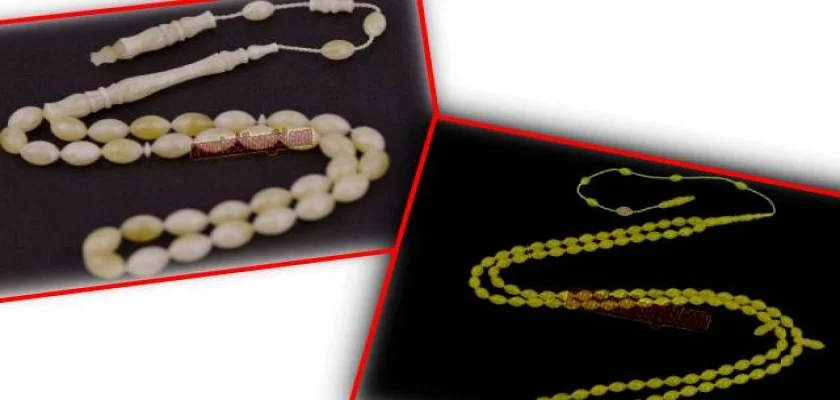
The main parts that a good tasbih should have include the bead (habbe), the marker (nisane, durak, muezzin, pul), the imamah, the knot holder (dugumlluk), spacer beads (ara taneler), the coin (sikke), the finial (tepelik, hatime), the pin (civi), and the tassel (puskul, kamci). Beads made in spherical, round, elliptical, turnip, and cylindrical shapes, as well as those with aesthetic carvings in different forms, constitute the main parts of a good tasbih. Small beads are used for regular tasbihs, while larger beads are preferred for collection purposes. In 99-bead tasbihs, markers are special pieces that hang outwards after the 33rd and 66th beads, and in 33-bead tasbihs, they are placed after the 5th bead to signify the five pillars of Islam. The imamah section, where the string holding the beads is joined, gains uniqueness through special ring designs. Additionally, there is a knot holder that prevents the imamah from sliding upwards, and small spacer beads are added after the knot holder, typically three more beads. The sikke section, used only in custom-made tasbihs, includes an additional piece called the Mevlevi sikke, shaped like a tulip. The two ends of the string joined at the imamah section are twisted here to form the top. After this part is secured with a pin, a tassel made of silk, silver, or gold threads is attached to its end, making it ready for use.
What is the Function of a Tasbih?
A kehribar (amber) tasbih, used for counting while reciting phrases like 'Alhamdulillah', 'Subhanallah', and 'Allahu Akbar', and the 99 names of Allah, also helps you relieve stress and calm down. Tasbihs, carrying different symbols and meanings, are also used as accessories. The tulip, which became the most favored flower of the Ottoman period with the dispatch of tulip seeds to Europe during the reign of Kanuni Sultan Süleyman, has many religious and spiritual meanings. Its importance increased during the Tulip Era in the Ottoman history in the 18th century. The word 'lale' (tulip) in Arabic contains all the letters of the word 'Allah', and according to the abjad calculation, both 'Allah' and 'lale' represent the number 66. This has led to the tulip being imbued with religious significance and value. In addition to its historical importance, the tulip, a valuable flower both religiously and spiritually, is still used in making tasbihs today. The kehribar tasbih, notable for its design, gains an extra meaning with the tulip motif used.
www.tesbihsergisi.com