
What to Do If Your Child Is Being Bullied?
What to Do If Your Child Is Being Bullied?
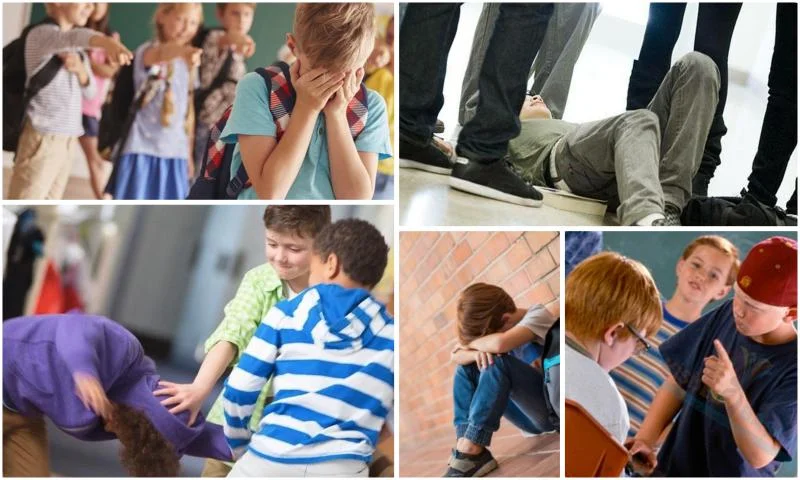
A good friend can protect a child from bullying by others. Apart from that, consider that your own child has turned into a bully. What should be done in this case? Even if bullying behaviors are verbal rather than physical, if they are not controlled in the early years, these behaviors continue to multiply towards adulthood. It has been found that children who have not had a proper family life (experiencing things like frustrating and ineffective discipline, weak parental guidance, lack of parental affection, and solving problems with aggressive behavior) have a high probability of becoming bullies in later years. You must have seen many children in your daily life using rude and vulgar words or trying to forcibly take something from their peers. Many children may give up this behavior as they grow older, but it has been observed that boys are more persistent in this regard than girls. Even if boys prone to bullying cannot show physical aggression, they may continue aggressive behaviors between the ages of two and five and, if left unaddressed, may grow into neglectful individuals who always make mistakes. It is very important to intervene when you notice your baby is not playing properly. From a very early age, you need to clearly indicate which behaviors are acceptable and which are not. Of course, there will be times when your child has disagreements with other children. For this reason, it is important to insist from the very beginning that your child should never hurt other children. If they insist on these behaviors, you can remove them from the environment and tell them that they will be alone as long as they behave like that. Persuading them to share toys and, when necessary, distracting them to play with other toys is beneficial for maintaining the order of the game. If another child is bullying within the group, you cannot ask the bullying child to leave the house. The most sensible thing to do here is to point the child out to your child and let them know that you never approve of such behaviors. Show your child that you do not like the other child's actions at all and how upset you are about it. This way, they will cope better with the bullying behaviors they are exposed to. If they see that you understand how they feel and that you are on their side, they will accept your opinions on this matter more easily.
Bullies
A bully harms those who are weaker than them. Bullying involves a bully, a victim, a provocative bystander, and bystanders. The provocative bystander is usually the bully's supporter. Bystanders are the shy and indecisive group. The bully lacks empathy, does not regret their actions, and is not emotionally affected. The victim, on the other hand, typically has a passive, low self-esteem, submissive, and most importantly, anxious personality trait. The victim has few or no friends. Bully children are "difficult children" as babies, meaning they are born with a difficult temperament; their parents are either overly authoritarian or overly indifferent. It is very important to intervene as soon as you feel your child is being bullied by another child. No child can cope with such a situation on their own. Your child needs to see you around and know that you take the matter seriously, as this will make them feel safe. If this bullying is happening at kindergarten, you need to tell the staff what they should do to stop it. If bullying occurs while you are with your child, then the first thing you should do is still to protect your child. If possible, you can also ask the other child's parents to intervene. Since you cannot discipline someone else's child, it is best to seek help from parents. For children who are victims or are prone to being victims, we must first prepare a suitable environment for them to gain communication skills, become effective, and gain self-confidence. Children who are subjected to bullying at schools often do not realize it or are threatened, and for these reasons, they do not tell anyone. We need to make them realize this. We need to raise awareness by saying, "Look, stronger children can behave this way towards weaker ones, is there anyone who behaves like this towards you? If so, they have no right to do that, you must tell us." Clear rules need to be set and applied for bully children. Such children need to be educated to identify and express their emotions. Their empathy needs to be developed, and they need to be directed to other areas where they can demonstrate their strength. For example, they can participate in sports activities, thus channeling their energy in a different direction. They should be taught communication skills and an environment should be created for them to make new friends.





