
What is the Difference Between Winter Car Tires?
In Which Weather Conditions Should Tires Be Changed?
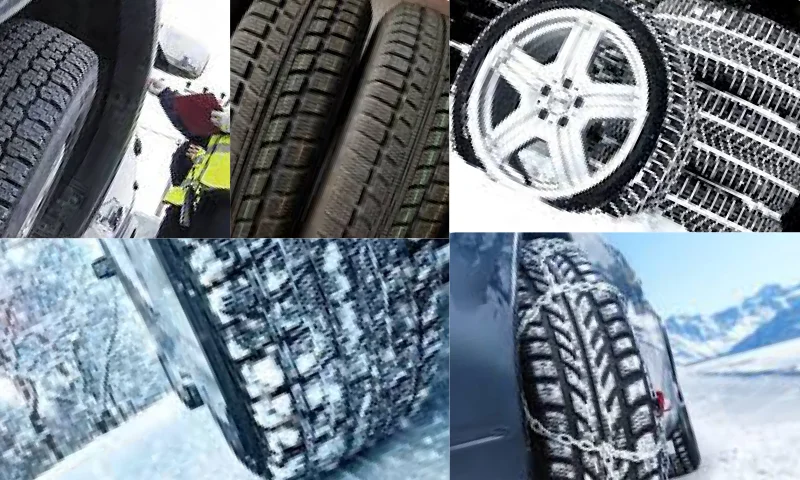
Winter tires, also known as snow tires among the public, provide you with better grip, shorter braking distance, and more controlled maneuverability in harsh weather conditions. In our country, winter tires have been made mandatory by the Ministry of Transport, Maritime Affairs and Communications. Now, vehicle owners are required to fit winter tires on their vehicles between December 1st and April 1st. First, let's correct a common misconception. This obligation does not apply only to commercial vehicles. All vehicle owners are required to fit winter tires. This includes off-road vehicles, non-commercial vans used for special purposes, and passenger cars. Winter tires are a tire model produced with a special compound that increases the vehicle's road holding below 7 degrees Celsius, with specially designed patterns on the tread surface. You can identify winter tires by the M+S marking on the tire's sidewalls. However, you should know that for vehicles such as vans, trucks, and passenger cars, the snowflake symbol should also be present alongside this marking. The term "winter tire" is not commonly used among the public. It has settled into our language as "snow tire." This term has created the perception among vehicle owners that winter tires are only used when it snows, and it seems it will take some time to break this perception. So, what is the difference in winter tires?
Maintenance and Replacement
Contrary to popular belief, winter tires offer you safer driving not only on snowy surfaces but in all adverse weather conditions. Winter tires reduce your vehicle's braking distance. According to research, a car stops in 43 meters at 50 kilometers per hour on a snowy surface with standard tires, while it stops in 37 meters with winter tires. The 8-meter difference is sufficient and significant enough to save your life or the life of a pedestrian. On icy surfaces, it is not hard to estimate how much the stopping distance of a vehicle traveling at 50 kilometers per hour increases between the two types of tires. Due to their different tread patterns and rubber compound compared to standard tires, winter tires allow your vehicle to grip the road much better. They put the control of your vehicle in your hands on turns, rather than leaving it to chance. They prevent you from breaking into a cold sweat to stop and get your vehicle moving on snowy ground. Another misconception is that all-season tires can be used in winter. While these tires offer better performance than standard tires in adverse weather conditions, the difference is considerable compared to winter tires. Like standard tires, these tires harden in cold weather, and the tire's tread, the part that contacts the ground, becomes unable to perform its function. Do not put yourself, your family, and other people on the road at risk during winter; be sure to fit your winter tires.





