
Guppy Feeding, Breeding, and Care in Aquariums
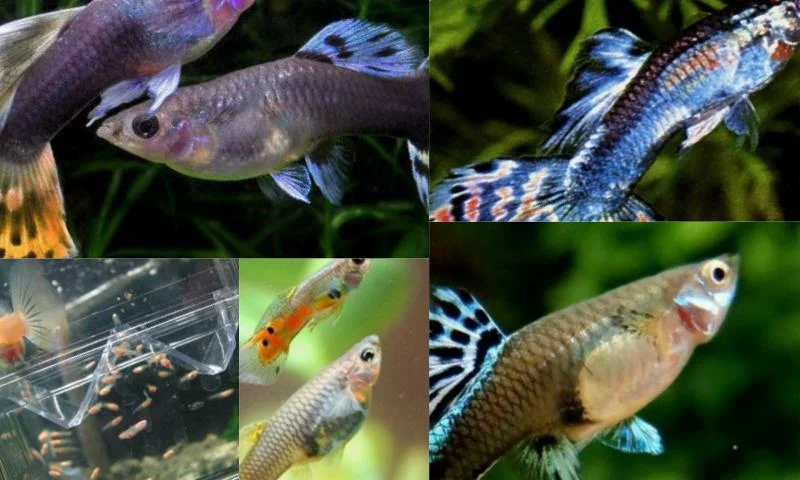
Guppies are indispensable guests in aquariums. They are omnivores. They will happily consume all kinds of food. Flake food should be preferred as it is easy to break down. Fry, just like adults, will happily consume this food. There is no need to add supplements like powdered food or fry food. Guppies are described as peaceful in many sources. It is inevitable that you will observe them fighting among themselves. Compared to other fish, their fights can be described as not aggressive. They should not be kept with fish larger than themselves. Even though we can describe fish as peaceful or aggressive, the saying "big fish eats small fish" will still apply.
It Would Be Wrong to Trap Guppies in Small Aquariums, Deceived by Their Small Size
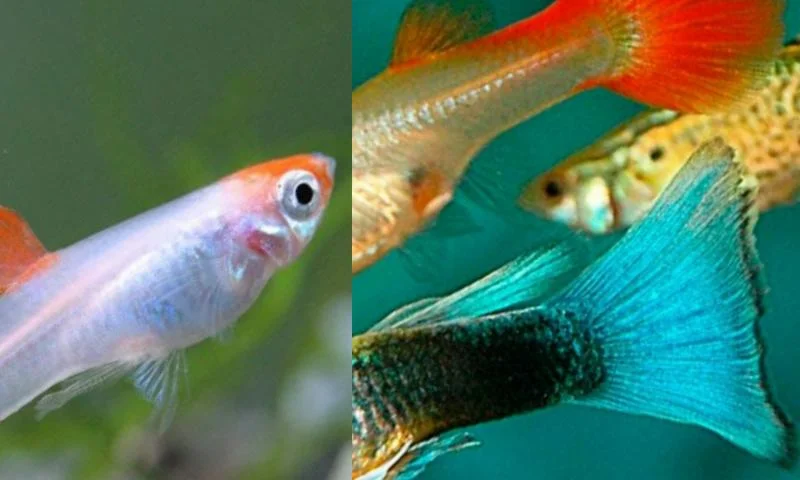
You can keep them in aquariums of at least 30 liters. Considering the possibility of breeding, this volume will quickly reach saturation. Males are very colorful and elegant, while females are plump and colorless. The male's anal fin has a different structure, resembling a reproductive organ. This organ, called the gonopodium, is the most fundamental distinguishing feature of the male from the female. They can give birth to nearly 100 fry in one litter. It is unnecessary to move the fry to a separate aquarium for their health, and you might experience significant losses. Creating hiding places will be a wiser approach. A planted aquarium creates a visually pleasing environment for guppies. Additionally, plants will provide shelter for weaker guppies and fry. When choosing substrate, it should be selected according to plant needs. They can be kept in a wide temperature range from 18 to 28 degrees Celsius. However, for breeding and healthy development, the optimal temperature is 24 degrees Celsius. At this temperature, plants will also develop at their highest yield. In terms of water parameters, they can live in a pH range of 7-8 and a dH range of 8-16. Tap water from the city network will be sufficient for their survival. To reduce the effect of chlorine in the water, it will need to be rested and aerated. Otherwise, you could lose your fish.





